Tuesday, May 6, 2008

University to introduce compulsory volunteering, broader degrees (ABC News)

Posted 6 May 2008

The university will soon make it compulsory for science students to do an arts subject and vice-versa

For the people who run Australia's universities, there is a feeling of frustration at the calibre of graduates emerging into the work force, so much so that Macquarie University in Sydney is strongly pushing the virtues of voluntary work in needy communities.

For school leavers, it used to be a choice between getting a job or going to university, but it now seems that some educators are concerned that studying for a degree is too narrow an experience for students. In addition, the university will soon make it compulsory for science students to do an arts subject and vice-versa.

Vice-chancellor professor Steven Schwartz says Macquarie University students will have no choice but to volunteer. "You learn tolerance, you learn team work, you learn communication skills, you learn to see the world through other peoples' eyes," he said. "You learn about other cultures and other places and other languages and sometimes those lessons are just as important as the lessons you learn in a classroom."

He says the volunteering is compulsory in the same way that other parts of the curriculum are compulsory. "We tell students what is in store for them when they come to Macquarie and they choose to come here because this is the kind of education they wish, so I suppose it's compulsory in the sense that we already compel students to do some part of the curriculum," he said. "But we are going to have enough of a variety, I think, of opportunities so that most students will find something that interests them."

Australian Volunteers International are going into partnership with Macquarie University to make the program work. The organisation's chief executive, Dimity Fifer, doesn't want it to be an elective to simply choose on the side. "It's actually a whole part of the philosophy of Macquarie University and I think students get that," she said.

"We have a huge amount of young people in their late teens, their 20s, early 30s, who are actually making a real commitment to say we want to be part of international volunteering. It's not the word per se, they get the spirit. Call it Generation X or Y - young people nowadays really do have an understanding of the sort of competencies and the sort of way you need to live in this new globalised world."

Degree overhaul
It is one of Australia's traditional sandstone universities, but Melbourne has also been at the forefront of radical changes to its degree structure. The Melbourne model is closer to a US-style college education. Undergraduate degrees such as law, medicine and engineering will only be available at graduate level. Students straight out of school are instead being funnelled into broad educational qualifications in arts, commerce, music, science, the environment and biomedicine. And there will be an emphasis on allowing students to dip into other unrelated subject areas.

Pro vice-chancellor of Teaching Learning and Equity at the university, professor Sue Elliot, says students can gain a more in-depth study experience. "Students in their undergraduate degrees undertake depth of study in their discipline, but also breadth of studying by studying outside their core degree," she said. "Students in commerce might take a language for example, students in arts might take a subject on climate change or something that broadens their scientific or mathematical knowledge.

"It's been a very highly successful program and we believe strongly that our graduates need a good awareness of global issues. We've got 60,000 Australians who go overseas each year for work, they need thorough preparation beyond - just that their depth of knowledge and their discipline - they do need this broader study to be prepared for their future careers."

Sharing subjects
At Macquarie University, within two years there will also be further changes to their curriculum. Science students, for example, will need to do some arts subjects, while arts students will gain some science subjects.

"I used to be a dean of medicine and of course where most of our doctors never got an opportunity to take anything other than medical science," Professor Schwartz said. "I'm wondering now, looking back, whether there might actually even be better doctors if they had the opportunity to read a bit of poetry, listen to a bit of music and learn a bit of history, maybe it would make them a better-rounded person."

But is there a danger that this sort of all-round degree might lead to a lack of specialisation? "That is a very good question. One of the things that we used to understand when we were training doctors is that much of what we taught them would be obsolete shortly after they graduated," Professor Schwartz said. "What we really wanted to prepare them for was a lifetime of learning rather than for that very first job after university."

"There is a danger with over-specialised, over-narrow degrees that while you might prepare them for the world as it is today, it's hard to guess what the world will be like in the future. Students who graduated from Macquarie this year won't retire until the year 2050, we don't know what the world's going to be like in 2015, so what we want to do is prepare them for a world of change and for a world in which they will have to keep on learning."

Article Link

Monday, May 5, 2008

Seven new energy vehicles set to roll out (China Daily)

By Hao Zhou
Updated: 2008-05-04 17:03

Seven new energy vehicle models are likely headed for mass production in the next one or two months, according to the latest list of auto manufacturers and models approved by the National Development and Reform Commission for production.

The seven models include Shanghai Volkswagen's fuel cell Passat, Shanghai General Motors' SGM7240, FAW's CA7130, and other four hybrid buses produced by Dongfeng Motor Corp, Beiqi Foton Motor, and Changan Auto. The fuel cell Passat is already set to be the official car for the Beijing Olympics opening ceremony, and the SGM7240 may be the hybrid Lacrosse. FAW Toyota's Prius and Dongfeng Honda's Civic Hybrid are representatives of the current hybrid car market.

Since the Prius was released in 2005, only 2,400 units have been sold until now, in contrast to FAW Toyota's 280,000 vehicles sold last year alone in China. The same thing happened to the Civic Hybrid as it is rolled to market at the end of last year. Both the Prius and the Civic Hybrid consume only 4.7 liters fuel per hundred kilometers, compared with a conventional 1.8-liter Civic, which consumes at least 5.8 liters fuel per hundred kilometers.

But most customers are held back by high prices. The Prius' standard version is now sold at 259,800 yuan ($37,220) in Guangzhou and the Civic Hybrid is about the same. Nonetheless, as environmental friendly development is high on the country's agenda, more and more new energy vehicles will do more than show off at exhibitions.

Article link

Wednesday, April 30, 2008

Cancer, stroke top killers for Chinese (China Daily)

2008-04-30

Cancer and stroke are
the top two causes of death for Chinese, a Ministry of Health (MOH) study revealed Tuesday. The report of the third national study (2006-08) on causes of death also ranked respiratory diseases third on the list and heart heart diseases fourth.

The study, which is based on two years of research and covers about 210 million residents of 160 cities and counties, also listed injuries and poisoning as the fifth highest cause of deaths in the country. Of the two previous MOH reports, the first was launched in the middle of the 1970s and the second, the early 1990s.

"The number of Chinese who died from the above five reasons account for 85 percent of the total deaths," MOH spokesman Deng Haihua told a press conference in Beijing yesterday.

The death rate of the country's rural and urban residents, particularly of those who died from chronic diseases, was also higher than world average levels. The incidence of stroke in China, for example, was up to five times higher than the record in Europe and the United States, and 3.5 times higher than in Japan. While China's cancer rate was close to that of the US, Britain and France, it was much higher than other Asian countries like Japan, India and Thailand...

...The five top causes of deaths also ranked differently in urban and rural areas. Cancer was the No 1 killer in cities, followed by stroke. In rural areas, stroke cases outnumbered cancer ones, the report showed. Heart diseases were more common than respiratory diseases in urban areas, while the opposite was true for the countryside...

...To promote health awareness, the MOH released a Chinese diet guide in January, which was an update of a decade-old version.Kong Lingzhi, deputy director of the MOH's disease prevention and control bureau, said it was a timely guide to encourage people to eat healthy to prevent against the worrying trend of chronic diseases.

Currently, the death rate from cancer has increased by 83.1 percent over the mid-1970s and by 22.5 percent over the early 1990s, ministry statistics showed.

In urban areas, deaths from lung, intestine, pancreas and breast cancer are higher, while in rural areas, deaths from liver, stomach, gullet and cervical cancer are higher, Kong said. Cancers related to living environment and lifestyles -lung, liver, colorectal, breast and bladder cancer - are also said to be rising. Among these, lung and breast cancer registered the highest increase of 465 percent and 96 percent in the past 30 years, respectively, the MOH report showed. Lung cancer has also replaced liver cancer to become the top killer among malignant tumors in the country, said Qi Xiaoqiu, the director of the disease control bureau under the MOH...

...To reduce the environmental and occupational factors leading to cancers, the authorities would also continue to promote research in the area, Qi said. The ministry will step up efforts to implement the occupation disease prevention law, to help reduce environment- or work-related cancers, he said.

Full article link

Monday, April 28, 2008

A dying turtle breed points to a battered China (IHT)

By Jim Yardley
Published: December 5, 2007

CHANGSHA, China: Unnoticed and unappreciated for five decades, a large female turtle with a stained, leathery shell is now a precious commodity in this city's decaying zoo. She is fed a special diet of raw meat. Her small pool has been encased with bulletproof glass. A surveillance camera monitors her movements. A guard is posted at night.

The agenda is simple: The turtle must not die.

Appreciated at last: The last female giant Yangtze soft-shell turtle on the planet. (Du Bin for The New York Times)

Earlier this year, scientists concluded that she is the planet's last known female giant Yangtze soft-shell turtle. She is about 80. As it happens, the planet also has only one undisputed, known male. He lives at a zoo in the city of Suzhou. He is about 100. They are the last hope of saving a species believed to be the largest freshwater turtles in the world...

Full article
Related Video

Thursday, April 24, 2008

Experts say sex abstinence program doesn't work (Reuters)


Wed Apr 23, 2008 4:33pm EDT
By Will Dunham

WASHINGTON (Reuters) - Programs teaching U.S. schoolchildren to abstain from sex have not cut teen pregnancies or sexually transmitted diseases or delayed the age at which sex begins, health groups told Congress on Wednesday.

The Bush administration, however, voiced continuing support for such programs during a hearing before a House of Representatives panel even as many Democrats called for cutting off federal money for so-called abstinence-only instruction.

"Vast sums of federal monies continue to be directed toward these programs. And, in fact, there is evidence to suggest that some of these programs are even harmful and have negative consequences by not providing adequate information for those teens who do become sexually active," Dr. Margaret Blythe of the American Academy of Pediatrics told the committee.

These programs, backed by many social conservatives who oppose the teaching of contraception methods to teenagers in schools, have received about $1.3 billion in federal funds since the late 1990s. Currently, 17 of the 50 U.S. states refuse to accept federal funds for such programs. Experts from the American Public Health Association and U.S. Institute of Medicine testified that scientific studies have not found that abstinence-only teaching works to cut pregnancies, sexually transmitted diseases or the age when sexual activity begins.

The American Psychological Association and American College of Obstetricians and Gynecologists also issued statements to the House Committee on Oversight and Government Reform criticizing the abstinence-only programs. Comprehensive sex education programs should emphasize abstinence as the best way for a teenager to avoid pregnancy or a sexually transmitted disease (STD), Blythe said. "Those adolescents who choose to abstain from sexual intercourse should obviously be encouraged and supported in their decisions by their families, peers and communities. But abstinence should not be the only strategy that is discussed," Blythe said.

HIGH STD RATES

Lawmakers cited government statistics showing that one in four U.S. teenage girls has a sexually transmitted disease and 30 percent of U.S. girls become pregnant before the age of 20.

Republicans said even if some abstinence-only programs do not work, others do, and it would be wrong to end the funding. Rep. John Duncan, a Tennessee Republican, said that it seems "rather elitist" that people with academic degrees in health think they know better than parents what type of sex education is appropriate. "I don't think it's something we should abandon," he said of abstinence-only funding. Charles Keckler of the U.S. Department of Health and Human Services said the Bush administration believes abstinence education programs send the healthiest message.

Stan Weed, director of the Institute for Research and Evaluation, a Utah-based group that researches abstinence programs, disagreed with the other health experts, saying research cast doubt on the effectiveness of broader, comprehensive sex education programs. Panel chairman Rep. Henry Waxman, a California Democrat, said, "We are showering funds on abstinence-only programs that don't appear to work, while ignoring proven comprehensive sex education programs that can delay sex, protect teens from disease, and result in fewer teen pregnancies. Meanwhile, we have no dedicated source of federal funding specifically for comprehensive classroom sex education," Waxman added.

Article link


Thursday, April 10, 2008

Retailers face big fines for violating plastic ban (China Daily)


Updated: 2008-04-10 06:55

Retailers may be fined up to 10,000 yuan ($1,430) for providing free plastic bags to shoppers, the Ministry of Commerce has proposed. The penalty will take effect from June 1, according to a draft regulation published on the ministry's website to solicit public opinion till April 14. The move follows a ban announced in January on the manufacture, sale and use of ultra-thin plastic bags (defined as less than 0.025 mm thick) from June 1 as part of efforts to protect the environment and save energy.

The draft regulation says retailers can set the price for plastic bags, but not below cost. They also have to include the price of the bags on customer receipts, or face fines of up to 5,000 yuan. The regulation does not apply to plastic packaging for frozen or cooked food. Meanwhile, retailers have to allow customers to carry their own bags or baskets; and are encouraged to provide eco-friendly substitutes.

Retailers believe the regulation will help reduce the use of plastic bags. "We have been encouraging customers to bring bags, and we think most of them will choose to do so when we stop providing free bags," said Li Li, head cashier at a Beijing WuMart supermarket.

Most customers interviewed by China Daily at the supermarket welcomed the ban. "I will bring a large fabric bag, and I don't think it will cause any inconvenience. It is a good policy to protect our environment," said a retired worker surnamed Wang.

Article link

Wednesday, April 9, 2008

China sprays Rudd over Tibet human rights claims (ABC)


By China correspondent Stephen McDonell


Senior Chinese Government officials have publicly attacked Prime Minister Kevin Rudd over his comments on Tibet.

In Washington, Mr Rudd said it was clear that human rights abuses were being committed in Tibet, and today he repeated those claims during a speech at a university in Beijing. But Chinese Government officials say his comments are unfounded.

Communist Party Central Committee spokesman Si Ta has criticised Mr Rudd at a Beijing press conference."The reporter mentioned about the certain politician who expressed concern about China's human rights record. This particular politician should join us in condemning the violent crimes in Lhasa - the crimes that have violated human rights," he said. Tibetan Regional Government chairman Xiangba Puncog also disagreed with Mr Rudd's comments and echoed Mr Si's view on human rights. "Australia, or other countries, should have better appreciation and understanding of the fact that people in Tibet are now enjoying democracy and have wonderful human rights protection, and those remarks are totally unfounded," he said.

But Mr Rudd says he will not be backing away from his plan to raise his concerns with the Chinese leadership. "It's important, as I said in my speech earlier today, to have a relationship that is capable of handling a disagreement and putting views in a straight-forward fashion," he said. "That's what I said I'd be doing in my remarks earlier today, and that's what I will be doing. I stand by the comments I made earlier on this matter."

He has also supported Australians' right to turn their back on the Olympic flame. "You know one thing about Australia [is], it's a robust democracy. We live in a free country - people can express their point of view in any manner that they choose," he said.

'A great impact'

In a speech earlier today to Beijing University students, Mr Rudd said he did not support a boycott of the Olympics, but he risked increasing Beijing's ire by talking about other human rights issues and controversies. "There are still many problems in China. Problems of poverty, problems of uneven development, problems of pollution. Problems of broader human rights," he said. "It is important to recognise that China's change is having a great impact, not just on China, but also the world."

Mr Rudd described China's social transformation as "unprecedented in human history", but warned his audience that its rise was causing anxiety overseas. "When people overseas are faced with big changes and uncertainties like these, they get nervous," he said, referring to jobs that have been transferred from other countries to China.

Mr Rudd, who was posted to Beijing previously as a diplomat, is due to meet Premier Wen Jiabao tomorrow and President Hu Jintao at the weekend at an economic forum on the southern Chinese island of Hainan. He has also said he would seek to work more closely with China on fighting climate change.

Article link

China-Australian ties (China Daily)


2008-04-09 07:27

There could be no one more qualified to speak about Australian perspectives on China than the country's Prime Minister Kevin Rudd. In his first trip to China in the capacity of Australian prime minister, this country, however, is no stranger to him. Rudd served in China as a member of Australia's Foreign Service. He is a scholar of Chinese history. He speaks Chinese fluently. When he became prime minister, Australia had as its head of government a Chinese expert unrivaled in other world capitals.

Though his country historically has had a strong relationship with the United States, Rudd has vowed to seek to rebalance this with a deepening partnership with Asian neighbors including China and India. Australia has now had diplomatic relations with China for 36 years. What began as a narrow relationship, interspersed with the occasional shipment of Australian wheat, has now broadened into an economic relationship, which as of today makes China, Australia's largest trading partner.

The economic potential of the bilateral relations is great. His knowledge of this country has made Rudd a more unbiased and constructive observer: China has achieved great things for its people over the last 30 years, lifting hundreds of millions out of poverty. The opening of its market, together with China's continued high levels of economic growth, has also helped bring further prosperity to the world. A positive partnership between the two countries that strengthens the international order and that makes these achievements possible would benefit us all.

Rudd has claimed to be an optimist, that together with vision, energy, and commitment, we can truly shape a Pacific Century. Australia has, what Rudd describes, as an engaged, creative, middle power diplomacy. The Asia Pacific Region is the third pillar of Australia's foreign policy, after the US and the United Nations. Australian attitudes toward Asia in general, and China in particular, have dramatically matured in recent years. Awareness is growing of the importance of China in the region and of nurturing a healthy China-Australia dialogue.

The annual strategic dialogue between the two countries, with the first in Canberra in February, should add more important dimensions to the bilateral relations. We hope his excellent command of Chinese will help avoid misunderstandings and misjudgments when the two countries interact.

Article link

Monday, April 7, 2008

Laos Fears China's Footprint (Associated Press)

By DENIS D. GRAY

VIENTIANE, Laos (AP) — A high-rise Chinatown that is to go up by Laos' laid-back capital has ignited fears that this nation's giant northern neighbor is moving to engulf this nation. So alarmed are Laotians that the communist government, which rarely explains its actions to the population, is being forced to do just that, with what passes for an unprecedented public relations campaign.

The "Chinese City" is a hot topic of talk and wild rumor, much of it laced with anxiety as well as anger that the regime sealed such a momentous deal in virtual secrecy. The rumblings are being heard even among some government officials, and foreign organizations operating in Laos are being told to refer to the venture as a "New City Development Project" rather than a "Chinese city."

Deputy Prime Minister Somsavat Lengsavad insists the deal poses no threat. "This is not unusual. Almost every country in the world has a Chinatown, so why shouldn't Laos have one?" he told Laotian reporters.

According to an artist's impression in state-run media, it will have a Manhattan-like skyline. There is no word on how many Chinese will live there. The figure of 50,000 families is widely speculated but Somsavat denied any such number had been agreed upon. The idea of 50,000 newcomers to a city of 460,000 is one factor causing unease. Another is location: The complex is to go up on the That Luang marsh, an area pregnant with nationalist symbolism and also ecologically important.

It comes at a time when China is rapidly becoming the No. 1 foreign economic and political power in Laos. As migrants, money and influence roll across the frontier, northern areas of the country are beginning to look like a Chinese province. According to Somsavat, a Chinese company last fall was granted a renewable, 50-year lease to transform 4,000 acres of "rice fields into a modern city," thus stimulating the business and investment climate of one of the world's poorest nations.

Somsavat, an ethnic Chinese-Laotian with close ties to Beijing, explained that when Laos fell short of funds to build a stadium for the Southeast Asian Games it will host next year, it turned to the China Development Bank. The bank offered a Chinese company, Suzhou Industrial Park Overseas Investment Co., a loan to build the stadium in exchange for the lease. The deal was signed last September, according to official media, with no known prior notice to the public. The company, contacted in Suzhou, declined to answer questions.

At a news conference, Vientiane Mayor Sinlavong Khoutphaythoune said three Chinese companies were involved in the project. Even some aging revolutionaries are critical, saying they fought to keep out the United States and others during the Vietnam War and now are seeing their own government opening the floodgates to foreigners. "The Lao people are not strong so they are afraid the Chinese will come in and expand their numbers and turn our country into China. We will lose our own culture," said Sithong Khamvong, a middle-class Vientiane resident and former Communist Party member.

There has been no official word on the conditions under which the Chinese might be allowed to settle in the new suburb. By unofficial estimate, some 300,000 Chinese live in Laos but true figures are impossible to obtain since many have acquired false documentation much as they have done in another of China's Southeast Asian neighbors, Myanmar. The north of that country is taking on a Chinese character.

Also irking many is the site of the planned city — near both the Parliament and the golden-spired, 16th century That Luang monastery, the most important symbol of national sovereignty and a sacred Buddhist site. The area is now a mix of marshes, rice fields and creeping urbanization despite substantial international aid to preserve it as a wetland. A 2003 study by the Switzerland-based World Wide Fund for Nature said the marsh is the main runoff for flash floods, a "sewage tank" for a city with no central waste water system, and a source of edible fish and plants for the poor. "My major concern is that the new city will have an impact on these three factors," says the study's author, Pauline Gerrard. The mayor counters that the marsh is already polluted and that proper development will improve the environment. Some reports say the area is designed to attract upmarket buyers and will be modeled on the Chinese city of Suzhou, famed for its canals and greenery.

But longtime foreigners in Vientiane can't recall the middle class ever being so angry."Lao journalists would like to write about this but they cannot. There is no protest except in coffee shops — in our 'coffee parliaments,'" Sithong said. Martin Stuart-Fox, an Australian author of books on Laos, says the old generation knew how to balance China's influence and Vietnam's and avoid being crushed between its powerful neighbors.But this generation has passed, he said in an interview from Australia, and now "it seems to me that the balance is being lost."

Article link

Thursday, March 27, 2008

Nuclear power plant embarks on further expansion (China.org.cn)

(Xinhua News Agency March 27, 2008)


Workers have started to dig a hole for housing one of the two new generating units planned to add at the first phase of the Qinshan nuclear power plant, the first Chinese facility of its kind.

The excavation work, which began early this month, will be finished by late July, according to a source from China National Nuclear Corp. Two pressurized reactors -- the application of the most-sophisticated and widely-accepted nuclear power technology in the world -- would be installed at Fangjiashan, Haiyan, on the northern coast of Hangzhou Bay, Zhejiang Province, not far from Shanghai. Each generating unit would have an installed capacity of 1 million kilowatts.

The State Environmental Protection Administration, which was promoted to a full ministry known as the Environmental Protection Ministry this year, approved two other reports involving the environmental impact and location safety over the proposed expansion. The two generating units will be in place and be made ready for power generation by 2013 and 2014.

The first phase of Qinshan Nuclear Power Plant was the first nuclear power plant on the Chinese mainland built independently by domestic engineers. Construction of the plant began in 1985. It was built with a 300,000 kilowatt prototype reactor with a lifespan of 30 years. It started generating power in 1991. It has so far produced 31 billion kwh of electricity, and generated 9.6 billion yuan (US$1.28 billion) in revenue and paid 1.8 billion yuan in tax. The plant also has second and third phases.

Chinese engineers have installed two generating units in the second phase and have been preparing for adding at least two more generating units there. The third phase houses two Canadian CANDU heavy-water reactors.

Full article link

Friday, March 14, 2008

China plays down protests in Tibetan monasteries (The Guardian)


Jonathan Watts in Beijing (Friday March 14 2008)

China is struggling to prevent burgeoning protests in Tibet from overshadowing its Olympic preparations amid reports that monks have gone on hunger strike after the region's biggest demonstrations in almost 20 years. Thousands of armed police have surrounded monasteries outside Lhasa, following marches against Chinese rule this week that took place in more Tibetan communities than previously believed.

"We have heard from more than one source that monks in Sera [a monastery in Lhasa] are on hunger strike, demanding the release of imprisoned monks," said Kate Saunders of the International Campaign for Tibet. "We don't know the number, but it seems there are many of them." Other reports said the monks were unable to leave.

The Associated Press quoted a man inside the monastery saying monks had been confined inside its walls and food supplies were dwindling. Sera is "surrounded by many people", the unnamed resident was quoted as saying. About a dozen monks were reportedly detained on Monday, when several hundred from Sera and Drepung monasteries took to the streets to mark the 49th anniversary of a failed uprising against Beijing. In the boldest action since 1989, some waved the banned Tibetan flag and shouted demands for more freedom. It emerged that a similar protest took place in Lutsang monastery, where hundreds of monks reportedly chanted slogans calling for their exiled leader, the Dalai Lama, to return. According to the Free Tibet campaign, 100 monks from Myera monastery also staged a demonstration. Since Monday there have been further demonstrations, including at Lhasa's third big monastery, Ganden. Thousands of police officers are said to have used teargas to break up rallies. There are reports of gunshots, but no casualties.

A Chinese foreign ministry spokesman said supporters of the Dalai Lama were "seeking to spark social turmoil". "This was carefully planned by the Dalai clique in a bid to separate Tibet and sabotage the Tibetan people's normal life of stability and harmony." The situation was now stable, he said.

The Guardian was unable to confirm the reports from Tibet and neighbouring provinces, where the Tibetan communities are tightly controlled by the Chinese government. A source in Lhasa said he had seen more than 20 military vehicles on the street and heard that roads to the monasteries were blocked off.

Exiled Tibetans say the confrontation has been peaceful, particularly compared with clashes when martial law was imposed in 1989. "It seems as though police and military are not using excessive force at present," Saunders said. "This would be unprecedented as a government response. They appear to have been ordered to handle this carefully ahead of the Olympics. "With more demonstrations expected, China has declared a climbing ban on the north face of Mount Everest, in advance of the arrival of the Olympic torch there this summer.

Supporters in several other countries have demonstrated this week. In India, exiled Tibetans marching back to their homeland were stopped yesterday, when Indian police arrested 100 of them.

Article Link

Wednesday, March 12, 2008

Pollution census launched (China Daily)

ZHENGZHOU: A thorough census of pollution sources involving a 30,000-member task force was launched in Henan yesterday to help better address the province's environmental issues.

According to Wang Guoping, director of the Henan Provincial Environmental Protection Bureau and head of the provincial pollution source census office, the large-scale campaign is a response to the first nationwide survey encouraged by China's environmental watchdog on tracing sources of industrial, agricultural and residential pollution.

Wang appealed on Monday to all staff in the environmental field to put the census at the top of this year's agenda. "The result of the survey will be serving as basic data to analyze the pollution distribution in different industries and places," he said. "It will provide evidence for mulling more effective pollution control measures."

Preparation work found that Henan has roughly 240,000 sites of pollution sources including 54,000 industrial, 63,000 residential and 125,000 agricultural sources.

According to Jiao Wanyi, official of the provincial environmental bureau, residential pollution is currently the most severe source in the province. It includes kitchen trash, recycled paper, metal, plastic, glass, hazardous trash and sewage. "However, it's a different story to before 2005 when industrial pollution as a major source plagued the province," Jiao told China Daily.

All papermaking factories that failed to meet clean production standards between 2003 and 2005 have been renovated or banned from operating as part of an effort to clean up the industry notorious for polluting.

By 2007 the province had taken a lead in launching sewage plants in all 108 counties and 18 cities, which has greatly enlarged the industrial treatment capacity. Meanwhile, solid waste disposal plants for related industry were also built.

A big agricultural province, Henan suffers from a high usage of fertilizer, pesticide and a large amount of animal waste. "The amount is unknown but farmers are getting to know the risk and danger caused by overusing them we will be evaluating the risk by this survey," Jiao said.

The provincial government dedicated 5 million yuan ($690,000) to the census project of provincial level polluters.

Article Link
[Enviro] Performance figures 'coming soon'(China Daily)


The performance of major companies and provincial governments last year against their environmental targets will be made public very soon, Xie Zhenhua, vice-minister of the National Development and Reform Commission (NDRC), said Tuesday.

Details of how companies performed will be made known this month, while reports on the performance of provincial governments will follow in May or June, he said. "Officials and businesses leaders will be assessed in line with the accountability system announced in November," Xie told a press conference on the sidelines of the NPC session.

Late last year, the government announced a new system for measuring performance, which ties career advancement to success in achieving environmental targets. Under the new rules, if company bosses or government officials fail to meet half the national goal of reducing energy consumption per unit of GDP by 4 percent every year, they will lose the opportunity to be promoted. Also, the central government will not approve any major new projects in provinces that fail to meet their targets, until their performance improves.

The government has set a target to reduce energy consumption per unit of GDP by 20 percent by 2010. But the fall in 2006 was just 1.23 percent, far below the 4 percent annual target. However, the situation improved last year, with the figure reaching 3.27 percent, as announced by Premier Wen Jiabao last week in his work report to the legislative body. The central government has already signed contracts with provincial governments to implement the green accountability system and governors have agreed to accept punishment if they fail. In addition, 1,000 energy-intensive companies have signed similar contracts with their local governments.

Last year, China's legislative body voted for the Energy Efficiency Law, which says the ability of local governments and their chief officials to meet energy-efficiency goals should be a key measure when higher-level governments examine their performance. Hu Guangbao, deputy director of the NPC's Law Committee, said the law will create a better legal environment for achieving sustainable development in China.

Xie said China still faces many challenges when it comes to energy conservation and it will take tangible measures to meet them. The country will continue eliminating outdated production facilities, including small thermal power generating units, cement facilities, steel and iron plants, Xie said.

Zhang Lijun, vice-minister of the State Environmental Protection Administration (SEPA), said the government will make full use of tax, fiscal and financial policies to push forward energy-saving and pollution-cutting goals. The country's top five banks offered loans of more than 100 billion yuan ($14 billion) last year to support companies' environmental plans, while the government is levying a full consumption tax on refined fuel oil and three other oil products retroactively from January.

Xie said the government will continue to require the country's 1,000 largest firms in iron and steel, petrochemicals and other sectors to meet global energy efficiency requirements and save 100 million tons of coal by 2010. The government has also pledged that within the next two years, wastewater from all of the country's 36 biggest cities will be purified before being discharged. "We need to mobilize companies and the general public to join the green campaign," Xie said.

Article Link

Tuesday, March 11, 2008

China to set up five new 'super ministries' (China Daily)


China will set up five new "super ministries" in the current round of government institutional restructuring, and a plan for the reshuffle will be submitted to the National People's Congress (NPC), or parliament, for deliberation on Tuesday afternoon. According to the plan, which was distributed to journalists before the parliament meeting, the five new "super ministries" are the ministry of industry and information, the ministry of human resources and social security, the ministry of environmental protection, the ministry of housing and urban-rural construction, and the ministry of transport.

To strengthen the government management on the energy sector, a high-level inter-ministerial coordinator, the national energy commission, is also to be established, with a national bureau of energy to be set up as its working office under the National Development and Reform Commission (NDRC).

The new bureau will integrate the NDRC's functions relating to energy management, the functions of the National Energy Leading Group and the functions of the Commission of Science, Technology and Industry for National Defense on nuclear power management. Meanwhile, the Ministry of Health will be empowered with the function to oversee food and drug safety.

The State Council will have 27 ministries and commissions apart from the General Office after the reshuffle, compared with the present 28. President Hu Jintao vowed to accelerate the reform of the administrative system and build a service-oriented government at the 17th National Congress of the Communist Party of China (CPC) last year. "We must lose no time in working out a master plan for it," Hu said in October. At the beginning of the NPC session, Premier Wen Jiabao labeled reform of the administrative system as "an important link in deepening reform, an important part of the reform of political institutions, and an essential step in improving the socialist market economy."

State Councilor Hua Jianmin, also secretary general of the Cabinet, made explanations of the plan to the NPC. On the necessity of the reform, Hua said in the report that functions of government have not been completely transformed, with public administration and public services being still weak; Structure of government institutions is not rational enough; Powers in some regards were too concentrated and lack due oversight and checks.

Hua lists the reasons for the government reshuffle as follows:
-- The functions of government have not been completely transformed, and the intervention in microeconomy is still more than needed. Public administration and public services are still weak. -- Structure of government institutions is not rational enough. The problems including overlapping responsibilities, powers and responsibilities being not well matched and low efficiency are quite serious. -- Powers in some regards were too concentrated and lack due oversight and checks. The phenomena of misuse of authority, abusing power for personal gains and corruption still exist.

Article Link

Monday, March 3, 2008

Housing, ecology top people's concerns (China Daily)


Housing, bridging the income gap between the rich and poor, environmental protection and social security are on top of people's wish list before the country's parliament and highest political advisory body begin their annual sessions.

The National People's Congress (NPC) and the Chinese People's Political Consultative Conference will begin their meetings on Wednesday and today, respectively.

Environmental Protection

"I hope the 'two sessions' will continue to emphasize on awareness for environmental protection and speed up eco-conservation efforts," Taihu Lake fisherman Zhang Jinwen says. Water supply to about 2 million residents in Wuxi, Jiangsu province had to be cut for several days last summer after an algae outbreak in the lake.

The lake's ecology has worsened over the past few years, Zhang says , because his catch from the freshwater lake has been falling constantly.

"Residents around the lake support the closure of nearby chemical companies, the major source of pollution, because our and our children's livelihood revolves around the water body," he says.

Ma Yongsheng, a resident of a village in the mountains of southwestern Yunnan province, has a different story. He hopes the government would compensate people like him for the crops destroyed by wild animals, such as black bears and monkeys. The number of such animals has grown after the government banned hunting a few years ago.

Urban residents have yet another tale to tell. Take Beijing Olympics volunteer Zhang Baozhong for example. He hopes the central government would ask big cities to pass laws to prevent noise pollution.

Full article

The Connection Has Been Reset (The Atlantic)


China’s Great Firewall is crude, slapdash, and surprisingly easy to breach. Here’s why it’s so effective anyway.

March 2008, by James Fallows


Many foreigners who come to China for the Olympics will use the Internet to tell people back home what they have seen and to check what else has happened in the world. The first thing they’ll probably notice is that China’s Internet seems slow. Partly this is because of congestion in China’s internal networks, which affects domestic and international transmissions alike. Partly it is because even electrons take a detectable period of time to travel beneath the Pacific Ocean to servers in America and back again; the trip to and from Europe is even longer, because that goes through America, too. And partly it is because of the delaying cycles imposed by China’s system that monitors what people are looking for on the Internet, especially when they’re looking overseas. That’s what foreigners have heard about.

They’ll likely be surprised, then, to notice that China’s Internet seems surprisingly free and uncontrolled. Can they search for information about “Tibet independence” or “Tiananmen shooting” or other terms they have heard are taboo? Probably—and they’ll be able to click right through to the controversial sites. Even if they enter the Chinese-language term for “democracy in China,” they’ll probably get results. What about Wikipedia, famously off-limits to users in China? They will probably be able to reach it. Naturally the visitors will wonder: What’s all this I’ve heard about the “Great Firewall” and China’s tight limits on the Internet?

In reality, what the Olympic-era visitors will be discovering is not the absence of China’s electronic control but its new refinement—and a special Potemkin-style unfettered access that will be set up just for them, and just for the length of their stay. According to engineers I have spoken with at two tech organizations in China, the government bodies in charge of censoring the Internet have told them to get ready to unblock access from a list of specific Internet Protocol (IP) addresses—certain Internet cafés, access jacks in hotel rooms and conference centers where foreigners are expected to work or stay during the Olympic Games. (I am not giving names or identifying details of any Chinese citizens with whom I have discussed this topic, because they risk financial or criminal punishment for criticizing the system or even disclosing how it works. Also, I have not gone to Chinese government agencies for their side of the story, because the very existence of Internet controls is almost never discussed in public here, apart from vague statements about the importance of keeping online information “wholesome.”)

Depending on how you look at it, the Chinese government’s attempt to rein in the Internet is crude and slapdash or ingenious and well crafted. When American technologists write about the control system, they tend to emphasize its limits. When Chinese citizens discuss it—at least with me—they tend to emphasize its strength. All of them are right, which makes the government’s approach to the Internet a nice proxy for its larger attempt to control people’s daily lives.

Disappointingly, “Great Firewall” is not really the right term for the Chinese government’s overall control strategy. China has indeed erected a firewall—a barrier to keep its Internet users from dealing easily with the outside world—but that is only one part of a larger, complex structure of monitoring and censorship. The official name for the entire approach, which is ostensibly a way to keep hackers and other rogue elements from harming Chinese Internet users, is the “Golden Shield Project.” Since that term is too creepy to bear repeating, I’ll use “the control system” for the overall strategy, which includes the “Great Firewall of China,” or GFW, as the means of screening contact with other countries.

In America, the Internet was originally designed to be free of choke points, so that each packet of information could be routed quickly around any temporary obstruction. In China, the Internet came with choke points built in. Even now, virtually all Internet contact between China and the rest of the world is routed through a very small number of fiber-optic cables that enter the country at one of three points: the Beijing-Qingdao-Tianjin area in the north, where cables come in from Japan; Shanghai on the central coast, where they also come from Japan; and Guangzhou in the south, where they come from Hong Kong. (A few places in China have Internet service via satellite, but that is both expensive and slow. Other lines run across Central Asia to Russia but carry little traffic.) In late 2006, Internet users in China were reminded just how important these choke points are when a seabed earthquake near Taiwan cut some major cables serving the country. It took months before international transmissions to and from most of China regained even their pre-quake speed, such as it was.

Thus Chinese authorities can easily do something that would be harder in most developed countries: physically monitor all traffic into or out of the country. They do so by installing at each of these few “international gateways” a device called a “tapper” or “network sniffer,” which can mirror every packet of data going in or out. This involves mirroring in both a figurative and a literal sense. “Mirroring” is the term for normal copying or backup operations, and in this case real though extremely small mirrors are employed. Information travels along fiber-optic cables as little pulses of light, and as these travel through the Chinese gateway routers, numerous tiny mirrors bounce reflections of them to a separate set of “Golden Shield” computers.Here the term’s creepiness is appropriate. As the other routers and servers (short for file servers, which are essentially very large-capacity computers) that make up the Internet do their best to get the packet where it’s supposed to go, China’s own surveillance computers are looking over the same information to see whether it should be stopped.

The mirroring routers were first designed and supplied to the Chinese authorities by the U.S. tech firm Cisco, which is why Cisco took such heat from human-rights organizations. Cisco has always denied that it tailored its equipment to the authorities’ surveillance needs, and said it merely sold them what it would sell anyone else. The issue is now moot, since similar routers are made by companies around the world, notably including China’s own electronics giant, Huawei. The ongoing refinements are mainly in surveillance software, which the Chinese are developing themselves. Many of the surveillance engineers are thought to come from the military’s own technology institutions. Their work is good and getting better, I was told by Chinese and foreign engineers who do “oppo research” on the evolving GFW so as to design better ways to get around it.

Andrew Lih, a former journalism professor and software engineer now based in Beijing (and author of the forthcoming book The Wikipedia Story), laid out for me the ways in which the GFW can keep a Chinese Internet user from finding desired material on a foreign site. In the few seconds after a user enters a request at the browser, and before something new shows up on the screen, at least four things can go wrong—or be made to go wrong...

Full article

Saturday, March 1, 2008

Animal rights in China:The stirrings of a new protest movement (The Economist)

Feb 28th 2008 | BEIJING
From The Economist print edition

HUMAN rights, or the lack of them, have long been a focus of China's critics at home and abroad. But a new rights movement—complete with idealistic local and foreign campaigners—is stirring: animal rights.

Animals are treated dreadfully in Chinese farms, laboratories, zoos and elsewhere. There are grim factories where thousands of live bears in tiny cages are tapped for medicinal bile. At safari parks, live sheep and poultry are fed to lions as spectators cheer. At farms and in slaughterhouses, animals are killed with little concern for their suffering.

According to Zhou Ping, of China's legislature, the National People's Congress, few Chinese accept that animals have any rights at all. She thinks it is time they did, and in 2006 put forward China's first national animal-welfare law. Her proposal got nowhere, and there is no sign of progress since. “There is so far”, she says, “only a small voice calling for change.”

Louder voices get short shrift from China's rulers. Even People for the Ethical Treatment of Animals (PETA), an activist group based in America, known for its robust approach, treads lightly in China. Its advertisements, featuring Chinese stars, are more playful than shocking. It is also working quietly with local officials, for example advising police in Nanjing on handling stray dogs—a growing problem in many Chinese cities where the keeping of pets, once rare, is becoming widespread.

Some Chinese animal-rights activists hope this trend heralds greater benevolence toward animals. One vegan activist and rock musician in Beijing, Xie Zheng, has adopted the slogan “Don't Eat Friends” to persuade people not to eat meat. That may be harder than getting them to forgo furs or bear-bile medicines. Vegetarian restaurants are spreading, but many patronise them to be trendy rather than ethical.

Campaigners are not discouraged. Jill Robinson, a Briton, spends most of her time in Sichuan province, caring for bears rescued from bile farmers, who are compensated in return for shutting down their operations. She says support from local young people is rising fast, and attitudes are starting to change. If China can stop binding women's feet, she asks, why should it not abandon cruelty to animals?

Article Link

No spit: Beijing's latest etiquette campaign draws mixed reaction (China Daily)

BEIJING - Kate and Leo did it on the Titanic, so why shouldn't Chinese? After all, the habit goes back five millenia.

Because it's Olympics year, that's why. And the capital city, which will host the games, is planning its first "No Spitting Day" this year with the goal of eradicating a top etiquette no-no. But the pronouncement by the city's public health authority on Thursday drew decidedly mixed reactions from local residents.

"The latest hygienic drive aims to eradicate the bad habit of spitting and promote a more civilized life style," said Liu Ying, a Beijing Municipal Bureau of Health official. She noted that spitting was a major cause of the spread of respiratory diseases, especially in spring, echoing a Chinese slogan: "Spitting kills even more than an atomic bomb."

Liu said the idea was inspired by the "Queuing Day" and "Seat Offering Day", two days newly designated by the Beijing Municipal Government each month to promote better manners. Details of how the new day would work were still dribbling in. But it quickly drew reaction from netizens. Some called it a "must" before the Olympic Games, while others said it was "needless and unfeasible". "I think it's healthier to spit rather than to swallow," said a netizen who called himself Mop Paparazzi on the Mop.com.

Liu, however, said people didn't understand the purpose of the drive. "We are calling for stopping the rampant spitting on the pavement, not urging everyone not to spit at all," she explained. "You can wrap your spit with a napkin and throw it into a trash bin," she added.

Spitting, littering and barbecuing in the street were identified by Beijing residents as the most intolerable bad manners to be stamped out ahead of the Olympics, according to a government survey of more than 200,000 people in the capital. The Olympic host has taken a series of measures to curb spitting, such as the distribution of spit sacks and a 50-yuan (US$7) fine for spitters.

A recent survey by the Beijing-based Renmin University found that in 2007, 2.54 percent of people surveyed in Beijing still spat in public, down by 2.36 percentage points from 2006. Or at least, that was how many admitted doing so. Many Chinese take the practice for granted.

Some netizens tried to justify the habit by quoting 5,000-year-old proverbs. "We used to say that China is a so large a country that one spit from every Chinese may drown all people in a small country, which shows we have a long tradition of spitting," said netizen Songbce in the forum of Sina.com, one of China's largest portal sites. "Even foreigners like spitting," he said, basing his argument on the scene in 'Titanic' where Leonardo DiCaprio taught Kate Winslet how to spit.

Some people attributed the spitting to Beijing's bad air quality and others said, half in jest, that it reflected improved living standards: according to traditional Chinese medicine theories, meat leads to sputum. "To eradicate spitting, Beijing should do more to stop smoking in the public places since smokers are always spitters," said a doctor surnamed Wang in the respiratory department of Beijing Puren Hospital. "The city should do more to ensure a clean Olympic Games," he said.

Article Link

Friday, February 29, 2008

Tougher law to curb water pollution (China Daily)


BEIJING -- China's top legislature on Thursday adopted an amended water pollution law that toughens punishment of company officials through hefty fines.

The revised Water Pollution Prevention and Control Law was passed at the 32nd session of the Standing Committee of the Tenth National People's Congress (NPC), which concluded here on Thursday. The law, with eight chapters and 92 provisions, will take effect on June 1.

"Enterprise heads directly responsible for causing severe water pollution incidents and others with direct responsibility will be fined up to half of their income of the previous year," said the law. Enterprises would be held responsible for 30 percent of the direct losses of any serious water pollution incident they cause and 20 percent for incidents of medium consequences. Previously, corporate executives faced only administrative penalties.

"The amount of fines should be imposed according to the severity of violations, and too little money cannot effectively tackle the long-standing problem of 'low violation cost'," said a statement of the NPC's Law Committee issued in December. The law also stipulated that the country would set up its water protection goal as well as an assessment system, which would be applied to local officials. Whether they reach the goal will be directly connected with their performance evaluation, according to the law. It allows environmental protection departments and relevant social organizations to support water pollution victims in lawsuits and the government encourages law firms and lawyers to provide legal aid to the victims. It added a provision to stipulate that the aquiculture industry should properly use nutrient feed in a bid to prevent over-nutrition.

Water pollution is among the top environmental concerns of the Chinese government and the public. A 2006 survey found that surface water generally was classified as containing intermediate levels of pollution, but one third of the 744 samples tested were graded at the worst pollution rating. The State Environmental Protection Administration (SEPA) handled 161 emergency environmental pollution incidents in 2006, of which 59 percent involved water pollution.

Article link

Related readings:
China to invest billions to deal with water pollution
Air, water pollution decreases
Pollution spill affects water supply for 200,000
Water pollution incident affects 9,000 in southwest China

Three Gorges Dam continues to suffer water woes
Over 40% drinking water in rural areas unhealthy: ministry

Monday, February 25, 2008

Electron Gets Film Debut In First-ever Video Of Its Kind (


It may not have won an Oscar, but the tiny electron has finally made its film debut. A new video shows how an electron rides on a light wave after just having been pulled away from an atom. This is the first time an electron has ever been filmed in this way, and the results are presented in the journal Physical Review Letters.

Previously it has been next to impossible to photograph electrons accurately since their extremely high velocities have produced blurry pictures. In order to capture these rapid events, extremely short flashes of light are necessary, but such flashes were not previously available. With the use of a newly developed technology for generating short pulses from intense laser light, so-called attosecond pulses, scientists at the Lund University Faculty of Engineering in Sweden have managed to capture the electron's motion for the first time.

"It takes about 150 attoseconds for an electron to circle the nucleus of an atom. An attosecond is 10-18 seconds long, or, expressed in another way: an attosecond is related to a second as a second is related to the age of the universe," says Johan Mauritsson, an assistant professor in atomic physics at the Faculty of Engineering, Lund University. He is one of seven researchers behind the study, which was directed by him and Professor Anne L'Huillier.

With the aid of another laser these scientists have moreover succeeded in guiding the motion of the electron so that they can capture a collision between an electron and an atom on film...

Full Article

Saturday, February 23, 2008

Former Khmer Rouge leader to 're-enact' crimes for judges (The Guardian)

February 22 2008

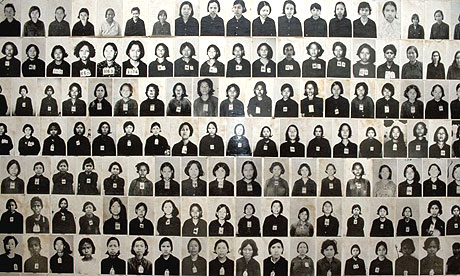
The Khmer Rouge's chief interrogator who headed the notorious prison where 14,000 Cambodian men, women and children met their deaths is to return to the scene of his alleged crime next week to stage a ghoulish "re-enactment".

Images of genocide victims are displayed on the walls of the Tuol Sleng Musuem of Genocidal Crime, formerly the Khmer Rouge torture centre run by Kaing Guek Eav

Images of genocide victims are displayed on the walls of the Tuol Sleng Musuem of Genocidal Crime, formerly the Khmer Rouge torture centre run by Kaing Guek Eav. Photograph: Corbis

The extraordinary scene will see 65-year-old Kaing Guek Eav, known as Duch, guide investigating judges from Cambodia's UN-backed genocide trial through the Tuol Sleng torture centre almost three decades after he fled the advancing Vietnamese troops that ended the Khmer Rouge's four-year reign of terror.

Several of only seven people who survived their incarceration in the former school in Phnom Penh's suburbs will join the party next Wednesday. Afterwards they will give taped evidence in a "confrontation" with their Khmer Rouge jailer at the tribunal's headquarters.

A day earlier, Duch, who is charged with crimes against humanity along with four other senior Khmer Rouge leaders, will be taken to the Killing Fields of Choeung Ek on the capital's outskirts where most Tuol Sleng inmates were murdered and buried in shallow graves.

Duch, who was a maths teacher before joining the revolution to establish a peasant utopia, will explain to the French co-investigating judge, Marcel Lemonde, and his Cambodian counterpart, You Bun Leng, the details of what happened there in the years after 1975, when up to 1.7 million people died.

The first war crimes trials are due to begin later this year, confounding the fears of many of the Khmer Rouge's victims that the communist ideologues responsible for killing a quarter of the population through torture, execution, disease and starvation might never be brought to justice.

Full article

Friday, February 22, 2008

Renting a girlfriend (China Daily)


An engineer at an IT company in Shanghai, rented a girl to be his girlfriend in an attempt to please his parents during the Spring Festival holiday - but his plan backfired.

"I am 28 years old and have no girlfriend. My parents worry about me being single so I thought I would please them by asking a woman to pretend to be my girlfriend," Zhou Chao said.

He paid the woman and took her home but his parents found out and were angered by their son's action.

Zhu Yi, a social affairs expert in Chongqing, said both Zhou and his parents were in the wrong. Zhou should not have resorted to cheating to please his parents and they should not have pressurized the young man.

(Chongqing Commercial Daily)

Article link

Tuesday, February 19, 2008

China confirms new human bird flu case (China Daily)

China's Ministry of Health on Monday confirmed a human case of H5N1 bird flu in the central Hunan Province.

A 22-year-old man surnamed Li in Jianghua County, Yongzhou City, suffered fever and headache on January 16 and was hospitalized on January 22. His symptoms worsened despite treatment.

Li died at 5 pm on January 24 after all rescue measures failed.

His specimens tested positive for the bird flu virus strain H5N1, said the country's Center for Disease Control and Prevention. The report didn't identify how he might have contracted the disease.

The virus is most commonly passed from sick poultry to humans who have close contact with infected birds.

The local government undertook prevention and control measures once the case was reported. Those who had close contact with Li were put under strict medical observation. So far, none have shown signs of the disease, the ministry said.

The case has been reported to the World Health Organization (WHO), authorities in Hong Kong, Macao and Taiwan, and some foreign governments.

The latest confirmed case of human bird flu took place in the worst snow-stricken province of Hunan, where prolonged low temperatures, icy rain and heavy snow have caused blackouts and traffic chaos.

On February 15, the Ministry of Health said that no cases of infectious epidemic or mass food poisoning were reported in China's snow-stricken areas by Feb. 14, and that the death toll caused by infectious diseases in the snow-stricken areas showed no year-on-year increase in the past month.

Article link

Monday, February 18, 2008

Kosovo awaits recognition, China deeply concerned

Kosovo looked forward on Monday to recognition by the Western powers headed by the United States, who went to war to save its Albanian majority, but Russia served notice the new state will never be forced on its Serb allies.

Beijing: China deeply concerned

China expressed grave concern over Kosovo's unilateral declaration of independence, said Foreign Ministry spokesman Liu Jianchao on Monday.

"Kosovo's unilateral act can produce a series of results that will lead to seriously negative influence on peace and stability in the Balkan region and on the realization of building a multi-ethnic society in Kosovo, which China is deeply concerned about," said the Chinese spokesman.

Beijing said the settlement of the Kosovo issue concerns the peace and stability in the Balkan region, the basic norms governing international relations and the authority and role of the UN Security Council.

The spokesman added that China has always held that the best way to resolve the Kosovo issue is that Serbia and Kosovo reach a plan acceptable for both sides through negotiation.

"China calls on the two sides of Serbia and Kosovo to continue to seek a proper solution through negotiation within the framework of international law, and the international community should create favorable conditions for this," Liu said.

Full article

Wednesday, January 30, 2008

Govt sets Stolen Generations apology date (ABC.net.au)

The Federal Government has set February 13 as the day for a formal apology to the members of the Stolen Generation. The apology will be the first item of business for the new Federal Parliament and will be delivered by Prime Minister Kevin Rudd.

Indigenous Affairs Minister Jenny Macklin says the apology is on behalf of the Australian Government and will not be attributing guilt to the current generation of Australians. Ms Macklin says the content of the apology is still subject to widespread consultation, but she says it will form a necessary step to move forward.

A traditional Welcome to Country will be held as part of the Parliament's opening ceremony by members of the Ngunnawal people.Indigenous groups have warmly welcomed the announcement of a date for a formal apology to the Stolen Generations.

Christine King from the Stolen Generations Alliance says it will be a historic and emotional day. "Sorry is the most important word because it has great meaning in our community," she said. "It means having empathy and compassion and understanding."

The speech has not been written yet but the Ms Macklin says she is confident the timing of its delivery is right.

Aboriginal and Torres Strait Islander Social Justice commissioner Tom Calma, has welcomed the Government's move to say sorry. Mr Calma says suggestions that an apology will expose the Government to litigation are scaremongering. He says it is important to acknowledge what happened. "A sorry is a sentiment that expresses that somebody really does have feeling about the ills of the past and wants to make a move forward," he said. "I think that as a country, as a population, as a nation it will be good for all of us to go through such a cathartic experience." He says including the word sorry in the apology will not result in a flood of compensation claims. "The ill informed are promoting that type of idea, the judiciary, the Government themselves have gone through that sort of due diligence process to identify whether it would open any flood gates," he said. "It hasn't since the apology by all the states."

Liberal Indigenous affairs spokeswoman Sharman Stone says the Coalition should join Labor in an apology to Aboriginal people. Dr Stone's northern Victorian seat of Murray has the state's largest population of Indigenous people outside of Melbourne. She says the former Coalition government's Motion of Regret in 1999 did not go far enough to acknowledge past wrongs. "We are told by many Indigenous Australians that still is unfinished business," she said. "There wasn't a belief that it was really strong enough to be considered a Government apology for past laws, regulations and practices."

Article link

Study finds middle age is truly depressing (Reuters UK)

Tue Jan 29, 2008 1:25pm GMT
By Michael Kahn

LONDON (Reuters) - Middle age is truly miserable, according to a study using data from 80 countries showing that depression is most common among men and women in their forties.

The British and U.S. researchers found that happiness for people ranging from Albania to Zimbabwe follows a U-shaped curve where life begins cheerful before turning tough during middle age and then returning to the joys of youth in the golden years.

Previous studies have shown that psychological well-being remained flat throughout life but the new findings to be published in the journal Social Science & Medicine suggest we are in for a topsy-turvy emotional ride.

"In a remarkably regular way throughout the world people slide down a U-shaped level of happiness and mental health throughout their lives," Andrew Oswald at Warwick University, who co-led the study, said on Tuesday.

The researchers analysed data on depression, anxiety levels and general mental health and well-being taken from some 2 million people in 80 countries.

U-SHAPED PATTERN

For men and women the probability of depression slowly builds and then peaks when people are in their forties -- a similar pattern found in 72 countries ranging from Albania to Zimbabwe, the researchers said.

About eight nations -- mostly in the developing world -- did not follow the U-shaped pattern for happiness levels, Oswald and his colleague David Blanchflower of Dartmouth College in the United States wrote.

"It happens to men and women, to single and married people, to rich and poor, and to those with and without children," Oswald said. "Nobody knows why we see this consistency."

One possibility may be that people realize they won't achieve many of their aspirations at middle age, the researchers said.

Another reason could be that after seeing their fellow middle-aged peers begin to die, people begin to value their own remaining years and embrace life once more.

But the good news is that if people make it to aged 70 and are still physically fit, they are on average as happy and mentally healthy as a 20-year old.

"For the average persons in the modern world, the dip in mental health and happiness comes on slowly, not suddenly in a single year," Oswald said. "Only in their fifties do people emerge from this low period."

Article link

Tuesday, January 29, 2008

Tips to make Spring Festival a celebration of nature (China Daily HK ed)

Rats have never got a good rap in the Western world, so it may seem strange that the rat is one of the twelve animals in the Chinese Zodiac. Being first in the cycle, the coming Year of the Rat is especially significant as it symbolizes renewal and a new beginning. At the time when the health of our planet is in such a dire state, this Chinese New Year wouldn't be a bad time to start being a little more environmentally conscious.

Traditional Chinese society has always been eco-friendly and nature revering. Our forefathers had the wisdom to take advantage of the New Year to celebrate life, hope, and joy - naturally. Unfortunately, this is no longer true of our practices these days. Just about everything in our New Year practices oblige us to pollute, waste, and harm others as well as ourselves.

The good news is that there are many ways to be friendly to the environment and still respect tradition. Here are some ideas on how we can have a good time and still be a responsible global citizen in celebration of the Year of the Rat:

Cleaning
  • Chinese New Year tradition dictates we clean our house from top to bottom before the New Year.
  • Do a thorough holistically cleansing (body, mind, and soul).
  • Don't be a pack rat.
  • Simplify your life.
  • Recycle, donate, or find a creative way to reuse things you don't really need or plan on throwing away.
  • Use environmentally friendly cleaners.Be kind to the rats.
  • Start anew.If your New Year's resolution has already failed, here's another chance to kick that bad habit.
Food
The New Year's Eve reunion dinner is undoubtedly one of the most important meals of the year, when family members near and far get together. These days, the distances traveled can be incredible. Here's how you can make it all the more special by being kind to your body and the environment:
  • Eat in. Traditionally, the reunion dinner would be celebrated in the comfort of our own homes. Stay true to tradition and be kind to your body and your pockets.
  • Waste less. Tradition calls for our family reunion dinner to be lavish and plentiful, but that doesn't mean we shouldn't take home the leftovers.
  • Be kind to the ecosystem and endangered species. Impress your relatives not with your wealth but with your wisdom by skipping the shark fins, abalone and endangered fish.
  • Choose more vegetarian dishes. They are better for your health, the environment, and are a shortcut towards longevity.
Decorations
Home decoration is mandatory practice, but it has also become a very lavish and wasteful affair.
  • Buy potted plants that will keep on growing for the rest of the year instead of cut flowers. Your home will be beautiful and filled with luck, longevity and prosperity all year round.
  • Add a personal touch by making your own decorations. Practice your Chinese calligraphy by writing your own faicuns and couplets.
  • Save money and resources by reusing your decorations. They will stay fashionable year after year.
Activities
Chinese New Year is the golden opportunity to take a break from the rat race, but instead of visiting the Flower Markets and watching the New Year Parade for the ninth time, here are a few ideas of things you can do:
  • Get away from the crowds and pollution and enjoy nature's bounty and blessings. Visit the country parks and go hiking, star gazing or bird watching.
  • Make good use of the holidays to re-connect with family members, relatives, and long-time friends.
  • Stay on the safe side of the law. Skip the fireworks and firecrackers and give the fire department and cleaning staff a well-earned rest. See the real thing if there's going to be a large scale fireworks or firecracker display in your city.
  • Cut down on your carbon footprint by taking a vacation nearby instead of on the other side of the world.
Shopping
In the same way that Christmas has become a celebration of materialism in the western world, Chinese New Year is becoming increasingly commercial in China. Our ancestors would never have approved of being a spendthrift. Here are some suggestions on ways to spend wisely:
  • Buy eco-friendly gifts. Choose durable ones that the recipients will truly use and enjoy.
  • Buy new clothes only if you truly need them. What about the almost new shirt you got for Christmas but haven't really worn?
  • Instead of using brand new banknotes for lai-see, plan ahead and try to collect nearly new ones. This will minimize waste of printing a large number of new ones for the occasion.
May your upcoming year be as prosperous as a well-fed rat!

(HK Edition 01/29/2008 page4) Article link