Monday, December 17, 2007

The iPod speaker that comes with built-in tuna


December 16, 2007


A TINY fish tank that doubles as a music speaker has sparked outrage among animal activists and aquarists. The iPond - up to 15 times smaller than the recommended tank size for the fish it contains - is proving a hit with Christmas shoppers. One Sydney store has sold out of the $70 device and other outlets are reporting brisk sales. But the RSPCA has called on the device to be banned because it is too small to provide fish with adequate oxygen supplies and a clean environment.

iPond . . . The gift they are trying to ban.

The iPond is sold nationally by the Pets Paradise and Pet Goods Direct chains. Users can play their iPods through a speaker built into the bottom of the brick-shaped tank. The tank's water capacity is about 650millilitres once rocks are placed in it. Pets Paradise is selling Siamese fighting fish with the iPond. The fighting fish are native to South-East Asia and have a "labyrinth lung" that allows them to take in oxygen from air. Typically they live in puddles and rice paddies.

A Melbourne Aquarium spokesman said Siamese fighting fish required a minimum tank size of 10 litres - dramatically more than the iPond provides. Animal Liberation Victoria's Noah Mark said he was disgusted by the invention. Studies proved fish had memories well beyond a few seconds and were social creatures that experienced pain and boredom, he said. "The fish in this thing does not look like it has very long to live and it can barely move," he said. "Even if it does live it's not [a] life worth living ... it's really just a torture box." Acoustics expert Jason Gedamke said there was no doubt noise from the speaker would escape into the water. "The speaker is directly coupled to the outside of the tank ... [so] you are going to have a small level of sound introduced," Mr Gedamke said. "It's the same as putting a fish tank on a speaker." RSPCA spokesman Hugh Wirth said despite the fighting fish's ability to breathe air from the surface, the tank was far too small for it to receive adequate oxygen. The small volume of water would lead to rapid temperature change and this meant the tropical fish would not live long, he said. The iPond should be banned, Dr Wirth said.

Marketing manager for the Pets Paradise and Pet Goods Direct chains, Alyse-Grace Robertson, said the tanks had gone on sale in September and were selling briskly. The group that manages the stores had received one formal complaint about the product. Customers sometimes asked questions about the welfare of fish in iPonds. "A few people ask, 'is the fish OK?"' Ms Robertson said. The chains were satisfied that fish in iPonds did not suffer. She said before selling the tanks the chains had consulted the Pet Industry Association of Australia. Output from the speakers was small and fish in iPonds seemed to flourish, she said. A spokesperson for Apple said the company was willing to comment on its own products, but not on accessories made by third parties.

Direct link

Friday, December 14, 2007

Global giants on pollution blacklist (China Daily)

Updated: 2007-12-14 07:25

Forty multinationals are among some 4,000 firms on an air pollution blacklist released Thursday. Top companies such as Michelin China, Sina-Mars Group APP in China, the joint ventures of Toyota and Ford, and subsidiaries of Sinopec figure on the list of the China Air Pollution Map (http://air.ipe.org.cn), compiled by the Beijing-based non-governmental Institute of Public and Environment Affairs (IPEA).

"We started collecting the records of polluters in 2004," said Ma Jun, director of the institute. Besides information about the polluters, the institute's latest database also records air quality and air pollution sources in 150 cities in the southern parts of the country. Ma said the institute gets polluters' information from local and central environmental protection departments' websites or from news reports.

The air pollution map is the second such blacklist launched by the group. The China Water Pollution Map has made public details of about 9,400 water violations since last year, including those involving up to 280 foreign firms. The water map has led 50 companies, including two local players, to respond; and two have cleared their names so far. To get their names removed from the blacklist, the companies need to comply with the rules and undergo a third-party audit.

Ma expressed the hope that the lists will pressure polluters to make improvements and encourage more people to join in the clean efforts. The blacklisted companies should move to "provide the public with an open explanation and mend their ways," Ma told China Daily. He said the air pollution map is only partial and more information about northern China will be released. "Access to information is a pre-condition for public participation," said Ma. "And China has progressed in disclosing environmental information."

Direct link

Wednesday, December 5, 2007

South China tiger cub born in South Africa (China Daily)

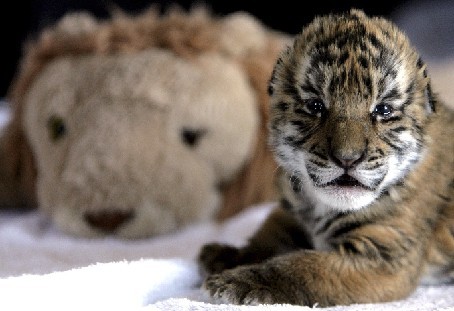
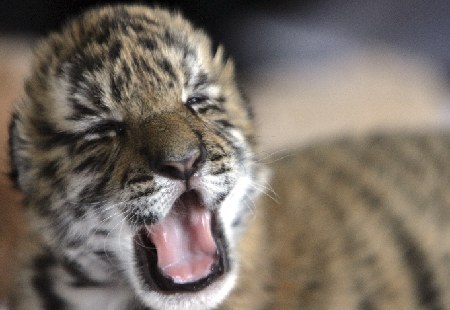
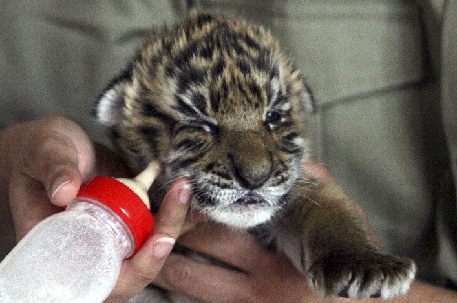
An 11 day-old male South China tiger cub is seen in the Free State province of South Africa,December 4, 2007. It is the first time the animal has been born outside China, the Save China's Tigers organization said on Sunday. The cub was born healthy and larger than normal at 1.2 kilograms on a wildlife conservation reserve, the group said in a statement. The cub was being hand-reared and would be taught to hunt for itself. [Agencies]


Hong Kong voters snub Beijing, strike blow for democracy


December 4, 2007

A RESOUNDING election victory for one of Hong Kong's leading democracy advocates has placed new pressure on Beijing to set out more concrete plans for universal suffrage. The byelection victory for Anson Chan over the Beijing-backed Regina Ip is being seen symbolically as a referendum for democracy itself.

Ms Chan headed Hong Kong's civil service before and after the city was returned to China in 1997, as the first ethnically Chinese person to hold the post. She came out of retirement last year because of her frustrations at the pace of political reform. Ms Ip, a former security chief best remembered for trying to push through deeply unpopular an anti-subversion laws, wants Beijing to maintain its guiding hand until at least 2017.

China promised to introduce universal suffrage when it regained Hong Kong but it continues to obfuscate about the form and timetable. Beijing is anxious to avoid setting an uncomfortable precedent for the mainland, analysts say. In October Hong Kong's Beijing-backed chief executive, Donald Tsang, was forced to apologise for claiming that Chairman Mao Zedong's cultural revolution in China was caused by excessive democracy.

Ms Chan received almost 55 per cent of the vote to receive a seat in the city's legislature, compared with Ms Ip's 43 per cent. Voter turnout was high after a heated, often violent campaign. Ms Chan said her triumph was a vote for universal suffrage at the first available opportunity, in 2012. "The results of this election indicate that Hong Kong people are anxious to push forward on democracy," she said.

Ms Ip does not say she opposes democracy, but wants it to be introduced in a realistic way and timeframe given Beijing's ability to intervene. "Unless we come together, Hong Kong's dream of democracy will forever remain beyond our reach," she said before the election.

Hong Kong's chief executive is currently elected by an 800 member electoral committee, which is strongly influenced by Beijing. Half of the city's 60-member legislative assembly is elected, and the other half is appointed, again with strong guidance from Beijing.

Russell Moses, a political analyst in Beijing, said Chinese leaders would be a little perplexed by the resounding defeat for their preferred candidate, as they had assumed Hong Kong citizens would support the status quo while the economy was strong. He said China's attitude to democracy in Hong Kong was evolving, but had perhaps hardened in recent times. "Beijing is worried that democracy in Hong Kong would be used by foreign forces to foment democracy on the mainland."

(Direct link)

Tuesday, December 4, 2007

Shonky Awards expose year's dodgiest products (ABC)

The consumer information group CHOICE has announced its annual list of the most dubious and dodgy products of 2007. A dog leash that snaps under the smallest amount of pressure, $90 fruit juice with fewer benefits than an apple, and a washing machine that uses 74 litres of water to dry five kilograms of washing are just some of the products that got the thumbs down from CHOICE this year.

CHOICE media spokesman Christopher Zinn says the Shonky Awards are intended to show the sheer madness of some products available on the Australian market.

Topping the list is a flying ring Frisbee toy with a warning not to be thrown in the direction of other people. There is also an award for the entire mobile phone industry for the bewildering range of fees, billing periods and rates that exist in Australia.

Mr Zinn says the Woofaz dog leash - winner of the Nasty Shonkyness award - was judged the worst because it blinded a a girl in Queensland when she was walking her daschshund - the clasp broke and the leash whipped back in her face.

"Because it was entirely poorly engineered for any dog, let alone a dachshund, and this is one of our issues that we really need a national product safety agency," he said. "At the moment we have a patchwork of federal and state agencies that look after this kind of thing. There was national action after we discovered and did tests on this thing and found it broke at very low forces."

CHOICE gave the Shonky Award for Low General Integrity to the hazelnut spread Nutella. Mr Zinn says it is advertised in a misleading way. "Of course it's mainly vegetable oil and sugar, with just about 13 per cent hazelnuts," he said. "Nothing wrong with that, but they do claim that it's a low GI food, low glycaemic index. Well, it is low GI but, you know what, so is chocolate cake and frosting, and you wouldn't give your kids that for breakfast."

Shrek-themed junk food

CHOICE has nicknamed the Advertising Standards Bureau 'Ain't Shrek Beautiful' for its attitude to Shrek-themed junk food released to tie in with the movie Shrek 3. "We've given them a Shonky because they dismissed every complaint that was made against the Shrek marketing, and it was all sorts of food, chocolates, cereals, mainly food which was high in fat, high in salt, high in sugar," he said. "We say they're out of step with community expectations on this, and that's why they got Shonky."

Another Shonky award went to 'superjuices' made from noni and goji berries from the Himalayas - priced at up to $80 per litre. "They say they're full of antioxidants; we tested the total antioxidant level and, do you know what? Three red apples have more antioxidants than one litre of this stuff," he said.

Greenwash

Mr Zinn says the LG combined steam washer and dryer won the Greenwash Shonky Award. It uses 74 litres of water just to steam-dry five kilograms of washing.

"Why LG have got it is because they claim that this is a wonderful environmental washing machine," he said. "Of course it's nothing of the sort. In other countries where water isn't such an issue, perhaps it's okay. But in Australia, on their website, they say that water saving is the number two reason to get this cleaner-dryer. It's madness."

Mr Zinn says plenty of 'snake oil-selling' still goes on.

"There's some very dubious products out there; there's new ways of giving them spin," he said. "We have to keep pace of it all. It's still plenty of Shonkys to choose from."

See direct link

China to expand nature reserves for biodiversity (China Daily)


Updated: 2007-12-04 11:38

BEIJING -- China will establish more nature reserves in an effort to preserve its rich natural resources and biodiversity, said Zhu Lieke, deputy director of the State Forestry Administration (SFA) on Tuesday.

By 2020, the SFA will directed 2,300 nature reserves specially for the protection of forest, wild animals and other natural resources, with a combined area of 140 million hectares, or 14.5 percent of China's total land area, Zhu told a Beijing press conference.

These nature reserves will protect 95 percent of the country's total plant types and wild animal species under state key protection and all the country's typical ecological systems, Zhu said.

The country will have more than 600 wetland nature reserves by 2020, protecting more than 60 percent of its total natural wetlands, he said.

China has planted 53.3 million hectares of forests in the past 58 years,more than any other country in the world, with forestry coverage rate rising from 8.6 percent to 18.2 percent, according to the administration.

China also aims to raise forestry coverage to 20 percent by 2010 and 23 percent by 2020, said Zhu.

The SFA figures show that the current number of nature reserves directed by the administration stands at about 1,740, accounting for 12.6 percent of the country's total land area.

China has established 470 wetland nature reserves and more than 30 pieces of wetland were designated as "Wetlands of International Importance" in the Ramsar Convention on Wetlands, an intergovernmental treaty signed in Ramsar, Iran, in 1971.

The treaty provides the framework for national action and international cooperation for the conservation and wise use of wetlands and their resources.

See article


Saturday, December 1, 2007

Boy collector donates 20,000 yuan to AIDS orphans (China Daily)


(Xinhua)
Updated: 2007-12-01 17:01

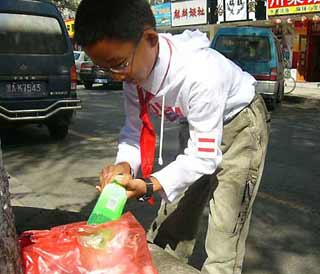
A 12-year-old schoolboy in Harbin, a major city in northeast China, has donated 20,000 yuan (AUS$3,000) he earned from collecting and selling 160,000 plastic soft-drink bottles to orphans in AIDS villages in Henan.


Sun Huixi collects plastic bottles on a street after school. [File]

Sun Huixi, a student at Xiao Hong Middle School, began raising money two years ago when he heard the Chinese Red Ribbon orphanage, sponsored by the All-China Federation of Industry and Commerce, was being built in Henan's Shangcai County, where many people were infected with HIV following botched blood transfusions and donations.

Sun first gave away 222 yuan (AUS$34) of his own savings to the orphanage. In May 2005, the boy was invited to the opening ceremony of the Chinese Red Ribbon Home, where he donated all his savings - more than 4,000 yuan ($615) - including money he had made from collecting bottles and articles he had written for teenage newspapers and magazines. Since then, he has carried on collecting bottles and donating money along with 800 books.

However, despite his charitable spirit, he has found himself mocked and ignored by his friends, who have labeled him "the little scraps collector". "I feel aggrieved," said Sun, "I'm doing a good thing. Why do they disagree with me? I just want to give the AIDS orphans some warmth and love. They won't feel lonely if everyone shows some love towards them."

On Friday evening, Sun received a national award for his contribution to the country's anti-AIDS campaign when he attended a special program on China Central Television (CCTV) to mark the 20th World AIDS Day, which falls on Saturday.

See full article